4-Week Puppy Training Routine: Potty, Cues, Socialize
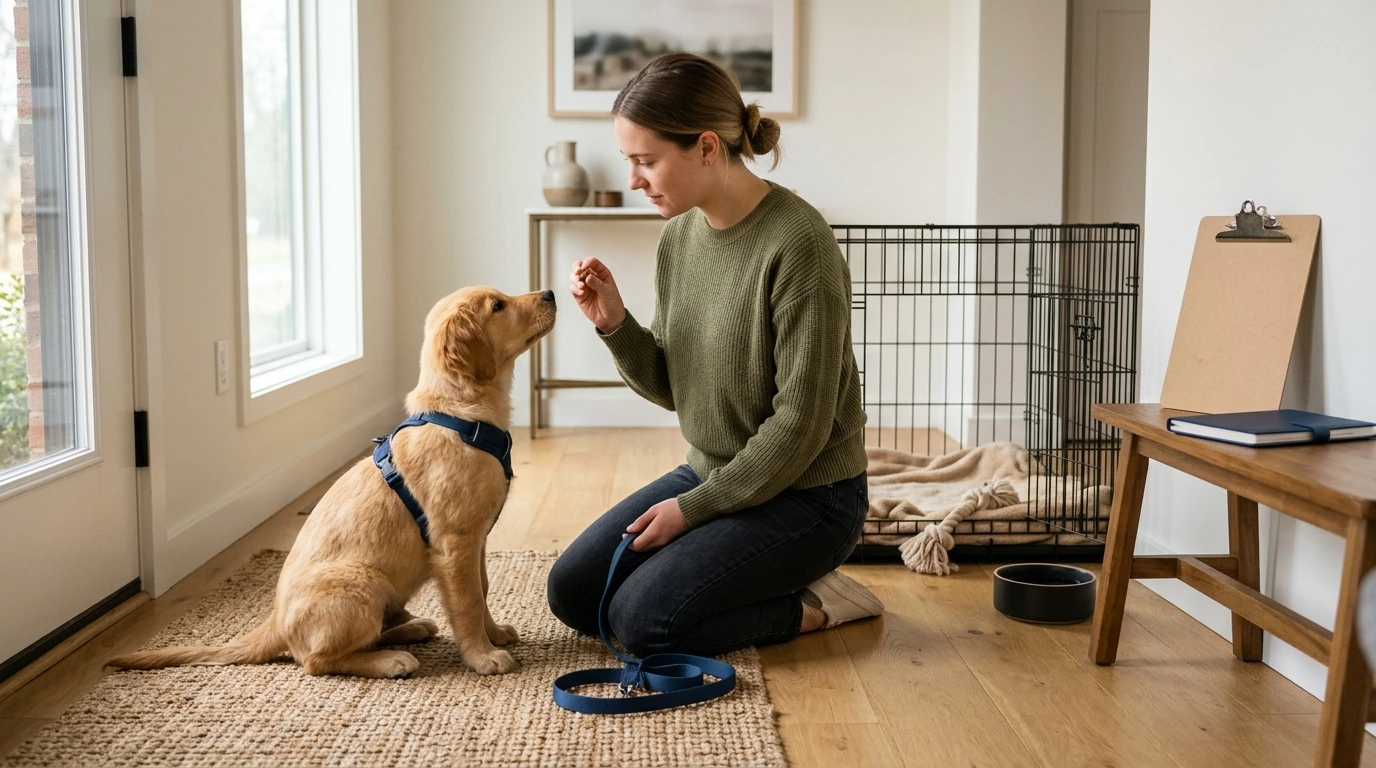
New Puppy Training Starter Guide: A 4-Week Routine for House-Training, Commands, and Socialization
A new puppy learns fastest with simple structure: predictable potty breaks, short training sessions, gentle social exposure, and enough rest. The goal isn’t perfection—it’s a repeatable daily rhythm that prevents bad habits from forming and helps your puppy understand what earns rewards. Below is a beginner-friendly 4-week routine for house-training, core cues, handling practice, and socialization, plus a printable-style approach that makes it easier for every caregiver to stay consistent.
Before Day 1: Set Up a Calm, Repeatable Routine
Prep reduces stress for both you and your puppy. Start by choosing one potty spot outside and taking your puppy to the same area every time; the consistent location becomes a powerful “this is where we go” cue.
- Create a safe confinement plan: a crate and/or puppy pen prevents accidents when you can’t supervise and encourages naps between activities.
- Lock in a feeding schedule: predictable meals often mean predictable potty timing. Keep water access appropriate for age and veterinarian guidance.
- Gather the basics: leash, flat collar or harness, small soft treats, enzymatic cleaner, chew toys, and a comfortable rest area.
- Agree on house rules: which rooms are allowed, whether furniture is allowed, and which cue words you’ll use (everyone should say the same thing).
Daily Rhythm That Works: Potty, Play, Train, Nap
Most puppy problems improve when the day follows a simple loop: potty → play → short training → calm chew → nap. Repeat that cycle throughout the day and you’ll prevent overstimulation (a common trigger for nipping and accidents).
Plan potty breaks around the highest-probability moments: after waking, after eating/drinking, after play, and before naps/bed. Keep training sessions short—1 to 5 minutes—so you can end on a win and stop before your puppy melts down.
| Time Block | What to Do | Why It Helps |
|---|---|---|
| Morning wake-up | Potty trip, calm praise, brief yard walk | Builds a reliable first habit of the day |
| After breakfast | Potty trip, 3–5 minutes of training, supervised play | Links meals to potty success and learning time |
| Mid-morning | Chew/enrichment, nap in crate/pen | Prevents overstimulation and supports self-settling |
| Lunch/afternoon | Potty, play, leash practice, short nap | Keeps energy balanced and reduces accidents |
| Evening | Potty, family time, gentle handling practice | Builds bonding and cooperative care skills |
| Before bed | Final potty, settle in crate/pen | Reduces nighttime accidents and restlessness |
If you’re not sure what “normal” looks like yet, track successes and accidents for one week (time, trigger, location). Patterns show up quickly—and once you see the pattern, you can prevent the accident.
House-Training: Clear Steps for Faster Progress
Supervision is the accelerator. If eyes can’t be on your puppy, use the crate/pen so they can’t rehearse accidents. Every indoor accident is a training rep in the wrong direction—so the most effective “training” is often simply preventing mistakes.
- Reward immediately after your puppy finishes pottying in the right place. Timing matters more than treat size.
- Interrupt calmly if you catch an indoor accident in progress: a neutral sound, then straight outside. Avoid scolding; it usually teaches hiding, not learning.
- Clean thoroughly with an enzymatic cleaner so the odor doesn’t “invite” repeat accidents.
- Increase freedom slowly: add access to one new room only after several days of success in the current space.
- Night routine: last potty right before sleep; if a nighttime break is needed, keep lights low and interaction boring.
Weeks 1–4 Plan: What to Focus on Each Week
Progress isn’t linear. Teething, growth spurts, and overtired evenings can cause sudden spikes in biting or accidents. When that happens, the fix is usually more structure and more rest—not harsher corrections.
Week 1: Foundations
Focus on bonding, a steady potty routine, name recognition, and a calm marker word (like “yes”) paired with treats. Handling practice begins here: brief touches to paws, ears, and mouth followed by a treat.
Week 2: Add Structure and Gentle Independence
Add sit, an indoor “come,” early leash introductions, and short alone-time practice (seconds to a few minutes) so separation doesn’t feel scary later.
Week 3: Expand Skills and the World
Introduce down, leave it, and polite greetings. Add new safe surfaces and environments to build confidence. For social learning, calm observation at a distance is often better than close interactions.
Week 4: Reliability with Mild Distractions
Strengthen cues with small distractions, begin short “stay” foundations, and practice calm settling on a mat/bed. The “off switch” skill is what helps a puppy fit into real life.
Core Commands for Beginners (and How to Teach Them Simply)
Socialization Without Overwhelming Your Puppy
Aim for variety: people with hats, umbrellas, different flooring, grooming tools, gentle traffic noise, and household appliances. Vaccination status matters, so follow your veterinarian’s guidance about public areas and puppy classes. The American Veterinary Society of Animal Behavior (AVSAB) puppy socialization guidance and the American Kennel Club’s puppy training basics are helpful references for safe, age-appropriate steps.
Common Beginner Problems and Quick Fixes
Printable Help: Keeping Consistency When Life Gets Busy
If you want a ready-to-use format, see New Puppy Training Starter Guide (printable 4-week routine) for a structured plan you can follow day by day.
For households also planning a realistic monthly pet budget (food, preventive care, training), Personal Finance Made Easy Ebook – Budgeting, Saving, Investing & Debt Management Guide for Financial Freedom can help you set up a simple system so puppy expenses don’t become a surprise.
FAQ
What is the 3 3 3 rule for new puppies?
It’s a common adjustment timeline: roughly 3 days to decompress, 3 weeks to learn the routine and start bonding, and 3 months to feel more settled. Puppies vary, but consistent potty breaks, gentle training, and predictable rest usually speed up comfort.










Leave a comment